
Boring Digital Products to Sell: 5 Niches With Steady Demand (2026)
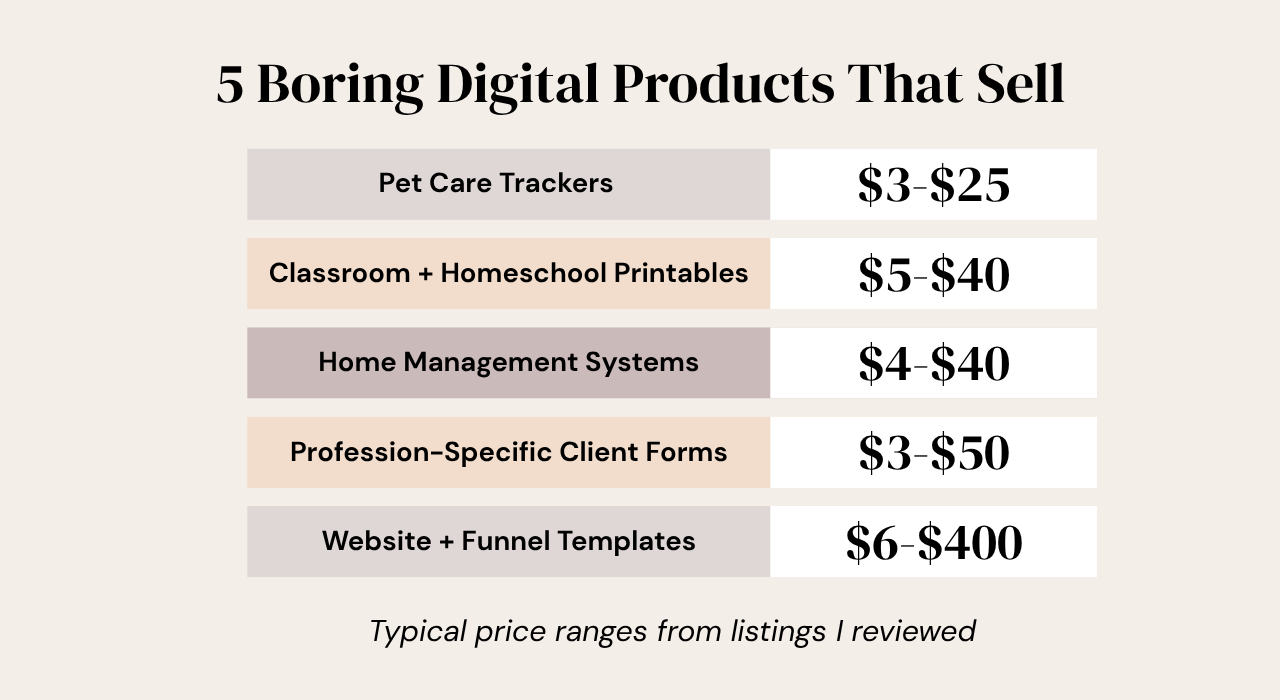
Oct 19, 2026The best boring digital products to sell are practical, niche-specific files that solve a routine problem for a defined buyer: pet care trackers, classroom and homeschool printables, home management systems, profession-specific client forms, and website or funnel templates. They stay in demand because the need keeps coming back, and buyers would rather purchase a finished file than build one themselves. Typical prices run from about $3 for a single form to around $400 for a full multi-page website template.
Key Takeaways
- Functional beats pretty. Products that solve a dull problem for a specific person outsell products that just look nice.
- Use a three-part test. The product is for a specific person, it fits a specific struggle or stressful moment, and buyers would rather buy it than build it.
- Five niches to start with: pet care trackers, classroom and homeschool printables, home management systems, profession-specific client forms, and website and funnel templates.
- Prices range from $3 to $400, depending on the niche and how complete the product is.
- Add the right disclaimer. Pet products are for record-keeping only, and client forms are templates, not legal advice.
If you've made something beautiful in Canva, listed it, and watched absolutely nothing happen, I see you.
Plot twist: it's probably not your design.
It's that you picked a pretty product instead of a functional one. The digital products that keep selling are mostly boring, practical, and a little unglamorous. They solve a dull problem for someone with a very specific struggle. A senior dog on three medications. A first house. A sub plan due tomorrow.
I spent hours digging into real listings, and five boring niches kept showing up as steady, year-round sellers. Brand new to all this? Start with my 10 best digital products to sell for beginners, then come back here for the boring ones.
What makes a digital product "boring but profitable"?
Three things. Every niche below passes all three.
- It's for a specific person. Not "trackers" in general. A tracker for a dog owner. Targeted sub-niches almost always beat broad catch-all ones.
- It fits a specific struggle or stressful moment. Your buyer is mid-crisis, mid-deadline, or mid-move, and she doesn't have the energy to make it herself.
- It's something people would rather buy than build. If a $10 file saves three hours, that's an easy yes.
Not sure what to sell yet? You're in good company. In the 2026 What Actually Works for Digital Product Sellers survey, 28% of the 86 respondents who hadn't launched yet named "I don't know what to sell" as their biggest blocker (24 of 86). That's a snapshot of our mostly beginner audience, not the whole market. The three-part test above is how you narrow it down.
Watch the full breakdown on YouTube →
Are pet care trackers a good digital product to sell?
Yes, because the buyer is usually in the middle of something stressful. A pet care tracker is a log or spreadsheet that helps an owner keep up with medications, vaccinations, feeding, or recovery. The more specific it is, the better it sells.
Ideas that fit:
- Dog medication and vaccination logs
- Post-surgery recovery trackers
- New puppy schedules for working owners
- Multi-pet feeding and vaccination records
- Small animal weight trackers
Price range: about $3 to $4 for a single log sheet, up to roughly $25 for a bundle or a full Google Sheets system.
One listing I looked at was a Google Sheets pet tracker and planner with tabs for health records, diet, exercise, a care schedule, and vaccinations. One file, a whole system.
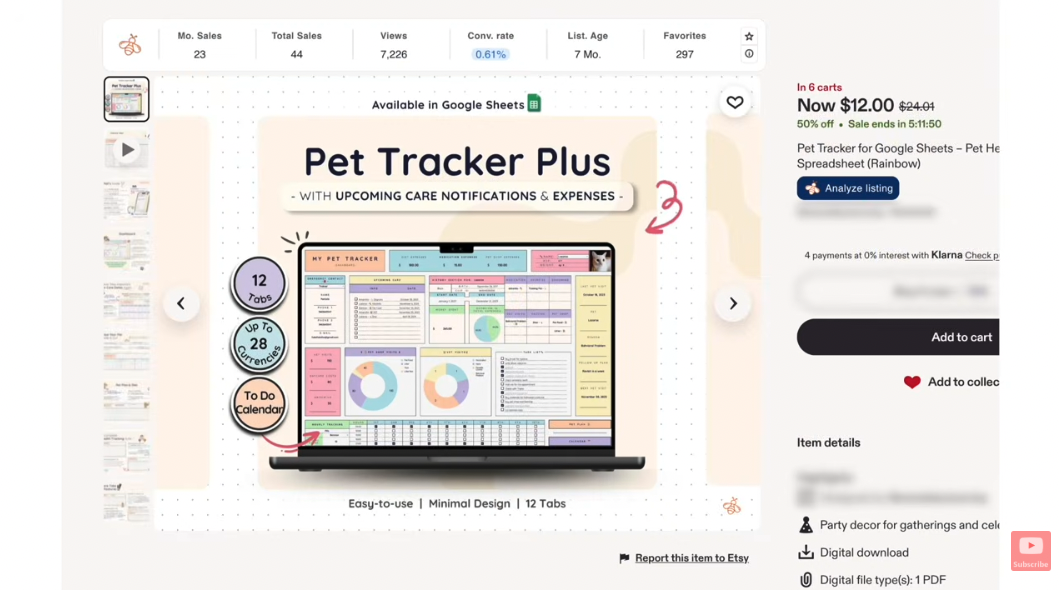
Why it sells: Picture someone with a senior dog on multiple medications, a pet fresh out of surgery, or a first puppy. She's stressed, and she's not going to build a tracker from scratch. Spending $5 or $10 so she doesn't miss a dose is a no-brainer. This need doesn't go away.
Build it in: Canva or Google Sheets.
Include a disclaimer. State in your listing that the product is for record-keeping only and is not veterinary advice. It protects you legally.
Do classroom plans and homeschool printables still sell?
They do. This niche covers anything that saves a teacher or homeschool parent time:
- Grade-specific emergency substitute teacher plans
- Editable labels and name tags
- Bulletin board sets
- Parent communication forms
- Behavior charts
- Homeschool transcripts and record-keeping templates
Price range: about $5 for an individual resource, up to around $40 for transcript templates and larger editable bundles.
Specific wins here too. One listing I found was a 12-month homeschool morning menu built around the Charlotte Mason approach, with hymns, character traits, and poetry for each day. It isn't a generic "homeschool pack." It speaks to parents who care about that exact method, and it carried Etsy's Bestseller badge. Another was a homeschool command center for grades, attendance, and transcript info.
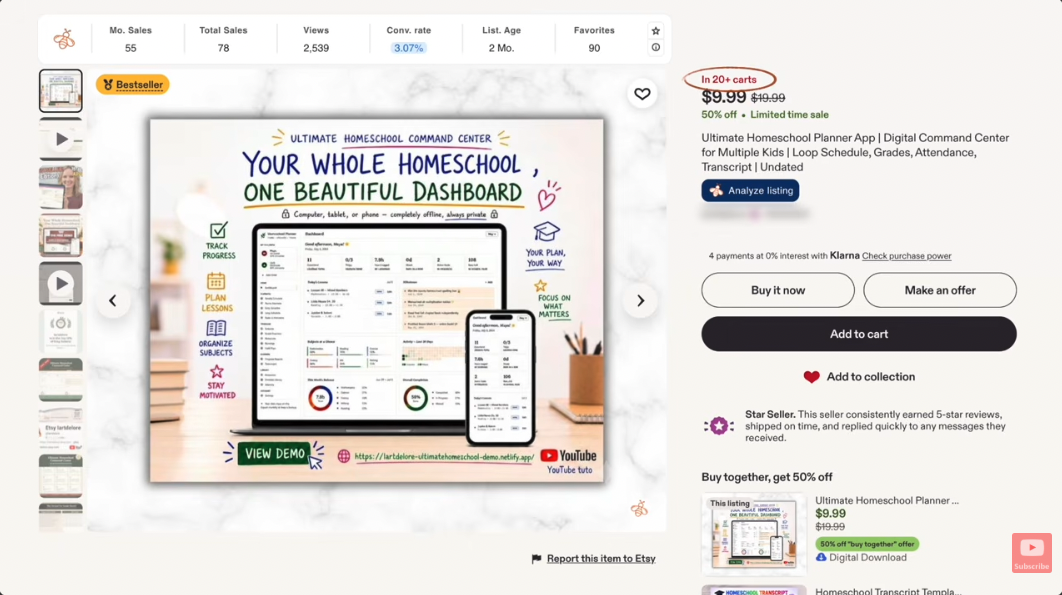
Why it sells: Teachers spend their own money and unpaid hours on their classrooms. Most would rather pay $10 or $20 for a done-for-you binder they can print and use than build one from scratch. Homeschool parents need college-ready transcripts, and many don't know how to make one. Schools also run on a calendar. In my research, there's a predictable July through September spike every year as new teachers come on board.
It's a category sellers are already in, too. Among the 94 sellers in our survey who had made a sale, 18% currently sell educational materials and worksheets, the most common product type in that group.
Can home management and maintenance systems be a profitable digital product?
Yes. These are resources that make organizing a home or a project more doable for homeowners and small landlords:
- Seasonal checklists by system, like HVAC, plumbing, or exterior
- First-year homeowner guides
- Renovation and contractor trackers
- Home inventory trackers for insurance purposes
- Small landlord systems
- Moving checklists
Price range: about $4 for a simple checklist, up to around $40 for premium new homeowner bundles and landlord spreadsheets.
Two listings I looked at: an emergency binder bundle with fill-in sheets for personal, medical, and financial details in case of a family emergency, and a home management binder with finance tracking, meal planning, daily, weekly, and monthly planning pages, and a decluttering planner. Both carried the Bestseller badge.
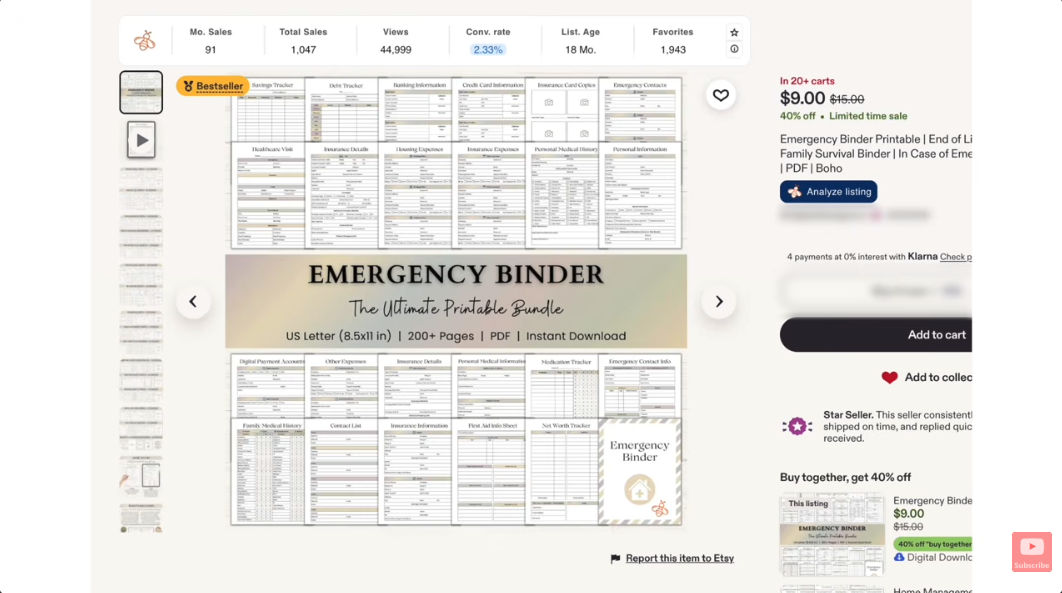
Why it sells: New homeowners often don't know what's due when. A system takes away the decision fatigue and the fear of missing an expensive task. Small landlords with one to five properties want a way to organize finances and records that isn't QuickBooks. And home maintenance never stops. Seasonal and annual cycles mean these files get used over and over, and there's always a fresh wave of first-time buyers and movers.
Brand new to digital products? Before you build anything, grab my free Digital Product Starter Guide. It covers file types, resolution, and which programs you can use to create these products, all in one downloadable PDF.
What profession-specific client forms and templates can you sell?
This is where "specific" matters most. Skip generic templates and build for one profession:
- Contracts, welcome guides, and intake forms for photographers
- Cleaning business bundles
- Bookkeeper month-end close checklists
- Dog groomer intake forms
- Personal trainer onboarding
Price range: about $3 for a single form, up to around $50 for a comprehensive business bundle.
Two listings I looked at: a cleaning business mega bundle with Canva templates for new client forms, contracts, invoices, and checklists, and a real estate listing presentation bundle with a home selling guide, a market analysis guide, and a home prep checklist. The cleaning bundle carried the Bestseller badge.
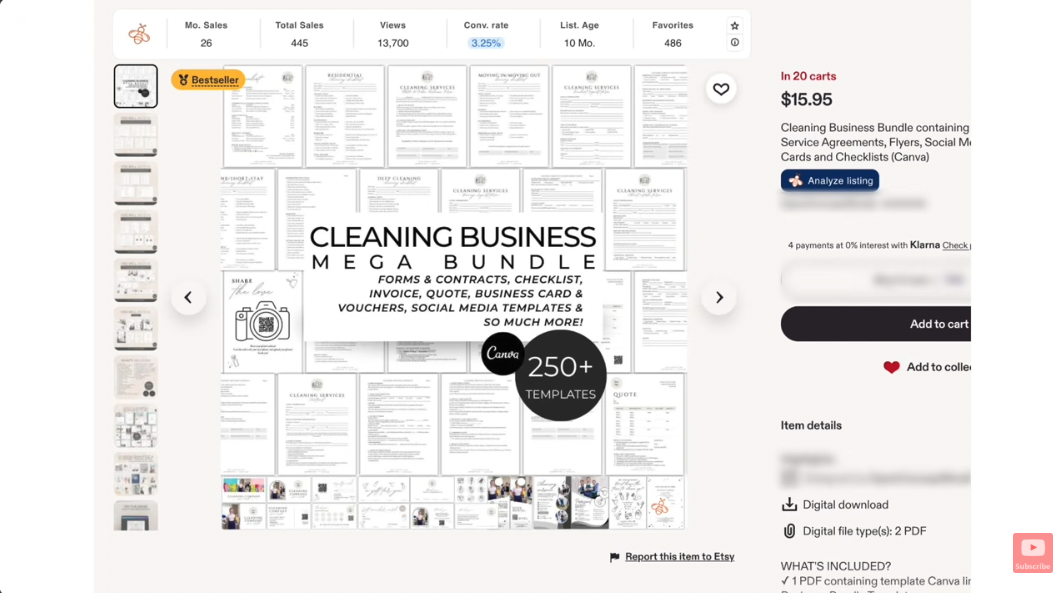
Why it sells: Most buyers are service business owners, and their time is billable. A $20 kit that makes the business look legit and gives them a system beats spending hours drafting it themselves or paying a lawyer thousands. New service businesses pop up constantly, and business buyers are typically less price sensitive than consumers because they see it as a business expense.
Heads up on liability. This is the highest-liability category on the list. If your files include contracts, state clearly that they are templates, that they don't include legal advice, and that buyers should have their own attorney or compliance officer review them. If a form touches health information, say the buyer is responsible for HIPAA compliance when it applies. A simple "not legal advice, consult an attorney" disclaimer belongs in every listing.
Are website and funnel templates worth the learning curve?
For many sellers, yes, but this niche asks the most of you. Your buyer has already chosen a platform, so your job is to build a template for whichever one they use. There are two tiers:
- Intro tier: smaller builds like one-page link-in-bio pages and lead magnet or opt-in pages, plus one-page coach and small business sites. About $6 for the simplest ones, up to around $40.
- Premium tier: robust, multi-page website templates. About $80 up to around $400.
Why it sells: It's a far cheaper alternative to paying a professional designer thousands for a custom site. And every business owner needs some set of pages, whether that's a one-page opt-in or a full build.
The catch: This is the product type that needs the most platform-specific knowledge. You need to know what belongs in the template and how to build it for your chosen platform. That's a steeper learning curve, and the higher price point is what makes it worth it. Once it's listed, delivery is automatic, so you're not filling orders by hand.
How do you turn one boring digital product into four?
Repurpose it for a different buyer.
Say you've built a home maintenance system. Instead of starting from scratch, edit that same file slightly for a new homeowner, a landlord, and a vacation rental host. Same file, tweaked for each audience, listed separately.
It's a simple way to widen your catalog without designing anything new. Wondering how many listings you actually need? I broke that down in How Many Digital Products Do You Need to Make Your First Sale?
Where should you sell boring digital products?
Marketplaces like Etsy are a great place to start. Just remember that on a marketplace, the customer isn't solely yours. You can't add their email to your list and sell to them directly again and again. Your own website is the one place you own the whole thing, including that email list. The products work on either, so it's your call where to begin.
Frequently Asked Questions
What is the most profitable boring digital product to sell?
There isn't one winner, because results depend on the buyer you choose and how well you serve them. Of the five niches here, website and funnel templates have the highest price ceiling (about $80 to $400 for premium multi-page templates) but need the most platform-specific knowledge. Checklists, trackers, and forms cost less ($3 to $50) and are quicker to build.
How much can you charge for boring digital products?
Based on the listings I reviewed, pet care trackers run about $3 to $25, classroom and homeschool printables about $5 to $40, home management systems about $4 to $40, and profession-specific client forms about $3 to $50. Website and funnel templates range from about $6 for simple one-page templates to around $400 for full websites.
Do you need a disclaimer when selling pet trackers or client forms?
A disclaimer is a smart move for both. For pet trackers, state that the product is for record-keeping only and is not veterinary advice. For client forms and contracts, state that they are templates that don't include legal advice, that buyers should have their own attorney or compliance officer review them, and that buyers are responsible for HIPAA compliance when it applies.
What tools do you need to create boring digital products?
Canva and Google Sheets cover pet trackers, checklists, and client form templates. Website and funnel templates are different, because you need to know how to build them in the specific platform your buyer uses.
Should you sell on Etsy or your own website?
Marketplaces like Etsy are a good place to start, but the customer isn't solely yours, so you can't add their email to a list and sell to them directly again. Your own website is the one place you own the whole customer relationship. Digital products work on either, so it's your call which to start with.
How do you choose which boring niche to start with?
Run each idea through three tests: is it for a specific person, does it fit a specific struggle or stressful moment, and would people rather buy it than build it? Then pick the niche where you understand the buyer best. Starting with one niche and one buyer is easier than testing all five at once.
When do classroom and homeschool printables sell best?
In my research, school-related products show a predictable sales spike from July through September every year, driven by new teachers every fall. Getting your listings live before July gives you a head start.
Ready to turn one of these ideas into a real product?
My free Digital Product Powerhouse masterclass is about 45 minutes long and walks you through my four-step system for selling digital products, including exactly how to take each step.
So, which of these five boring niches are you leaning toward? Hit reply on my next email and tell me. I read every one.
Not on my list yet? Grab the Digital Product Starter Guide and you'll be automatically added!
